
What is sunspot and how does it form
The question what is sunspot and how does it form can be answered through a clear explanation of its definition and causes.
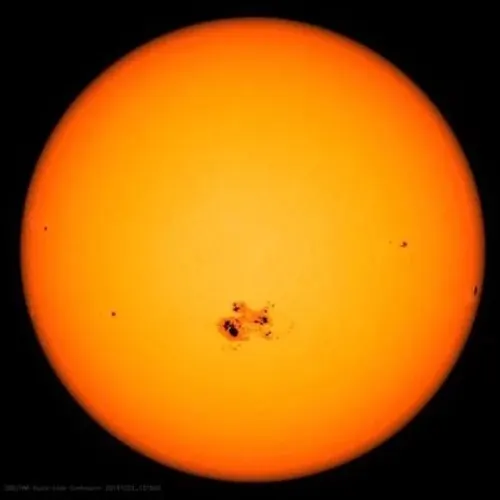
How does a sunspot form
How does a sunspot form relates to the dynamics of plasma and magnetic fields inside the Sun. The Sun rotates at different speeds across its latitudes causing magnetic field lines to twist and stretch. When these lines become highly concentrated they burst through the solar surface forming strong vertical magnetic loops. These loops block convection beneath them reducing the upward heat flow. As a result the temperature drops by several hundred to a few thousand degrees compared to the surrounding areas making the region appear dark. Sunspots usually appear in pairs with opposite magnetic polarities that change direction every eleven years corresponding to the solar cycle. During the solar maximum the number of sunspots increases while during the solar minimum they nearly disappear. Each spot may last for days or weeks before breaking apart.Sunspots are not just visual phenomena they have practical impacts on Earth. Regions with intense magnetic fields produce solar flares and coronal mass ejections that release bursts of charged particles into space. These events can trigger geomagnetic storms disrupting satellites power grids and radio communications. Continuous monitoring of sunspots helps forecast these disturbances and protect modern technology. To safely observe the Sun specialized solar filters must be used because direct viewing can cause severe eye damage. In conclusion what is sunspot can be defined as a magnetically cooled dark region on the Sun’s surface and how does it form as the result of twisted magnetic fields suppressing heat flow. Understanding sunspots is essential for both solar physics and safeguarding our technological infrastructure. Date Published:


