Niye Neden
NiyeNeden.com
Why, Reason, Explained!
Health Life Technology Islam Machine Nutrition Public Science Art Info

Why are fossils found in rocks?

Fossils are found in rocks because remains of living things are preserved and mineralized in sedimentary layers over time.

Why are fossils found in rocks image Why are fossils found in rocks is a question that reveals how nature preserves traces of life across millions of years. Fossils are the mineralized remains or imprints of once-living organisms that became buried in layers of sediment. Over time, water, wind, and ice carried sand, mud, and minerals that covered these remains, isolating them from oxygen and decay. As pressure built up, the sediments hardened into rock, and the organic structures slowly turned into stone. This process allows the memory of ancient life to survive. Just as the story of why Satan rebelled against God and refused to bow symbolizes that nothing in creation happens without purpose, the preservation of fossils in rock follows natural laws of order and transformation.

Sedimentary rocks and the fossilization process

Fossils form primarily in sedimentary rocks because these rocks are created by the gradual accumulation of mineral particles. When an organism dies, it may quickly be buried by sediments in a riverbed, lake, or seabed. The lack of oxygen prevents decay, while minerals in water infiltrate the remains, filling pores and hardening the structure. Over thousands or millions of years, the surrounding sediments compress into solid rock, preserving the shape of bones, shells, or even soft tissues. Igneous and metamorphic rocks, however, cannot preserve fossils since their intense heat and pressure destroy organic material. Nature thus keeps its record in the quiet layers of sedimentary stone.

Nature’s way of preserving time

Each fossil embedded in stone is a page from Earth’s history. Layers of rock act like a timeline, with fossils marking the evolution of life through eras. These preserved remains are not random but part of the planet’s systematic record-keeping. Energy, decay, and renewal follow predictable patterns; even death contributes to the balance of existence. Fossils are nature’s memory, silently narrating the story of transformation. Just as every act of rebellion meets its consequence, every living being leaves a trace governed by natural law — nothing truly disappears, it only changes form. /

Similar Geology Questions and Answers ↓

Why does soil undergo erosion?

Why does soil undergo erosion?

Soil undergoes erosion when wind and water carry away the upper fertile layer, weakening the land’s structure.

Read More
Why do volcanoes erupt?

Why do volcanoes erupt?

The cause of a volcanic eruption is the pressure in the Earth's crust, the rise of magma, and the compression of gases.

Read More
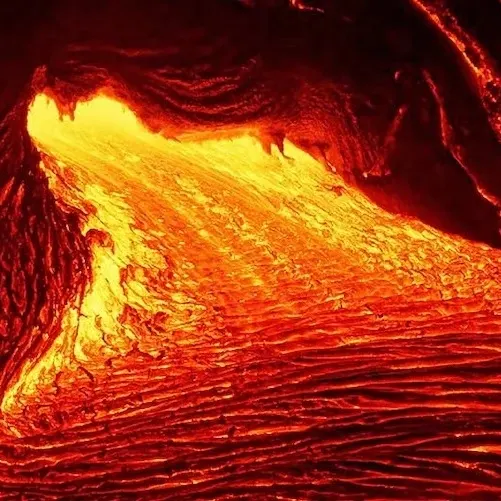
Why does magma rise to the Earths surface?

Why does magma rise to the Earths surface?

Magma rises to the Earth's surface due to pressure differences and density variations in the crust.

Read More
Why is seawater salty?

Why is seawater salty?

Seawater is salty because minerals from rocks and seafloor processes accumulate over millions of years without being removed.

Read More
Why does the Earth's crust move?

Why does the Earth's crust move?

The Earths crust moves because convection currents in the mantle push tectonic plates in search of energy balance.

Read More
Why Do Earthquakes Occur?

Why Do Earthquakes Occur?

Why do earthquakes occur? Learn about the causes and effects of earthquakes formed by energy buildup in the Earth’s crust, fault lines, and volcanic activity.

Read More