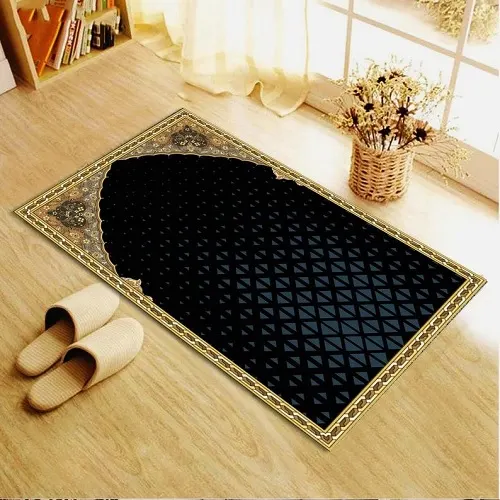
Why Do Muslims Face the Qibla During Prayer?
Facing the Qibla in prayer creates unity focus and discipline The direction of the Kaaba represents devotion obedience and shared belief.
Read Why
Facing the Qibla in prayer creates unity focus and discipline The direction of the Kaaba represents devotion obedience and shared belief.
Read Why
The absence of bowing and prostration in the funeral prayer comes from its prayer focused nature and its purpose as a collective supplication for the deceased.
Read Why
Giving a child a name from the Quran ensures religious connection and a meaningful, blessed choice.
Read Why
Men should not wear gold because it is forbidden in Islam and may negatively affect skin and the immune system.
Read Why
Why is halva distributed at funerals explains how cooking and sharing halva supports mourning, prayer and communal solidarity.
Read Why
A mawlid is recited at home to remember Allah, honor the Prophet, receive prayers, and bring spiritual peace and blessings to the household.
Read Why
Worship at specific times strengthens spiritual discipline and builds a continuous sense of devotion.
Read Why
Hadiths were written later because oral transmission was trusted, Quran preservation was prioritized, and growing variations made written recording necessary.
Read Why
The Quran was compiled into one mushaf to preserve the text ensure unity and protect it from loss during early Islamic expansions.
Read Why
Mawlid kandil is celebrated to remember the prophets birth and to strengthen the love and respect that keeps his message alive.
Read Why
Water is poured on graves as a symbol of mercy respect and order based on Islamic interpretations cultural traditions and practical reasons.
Read Why
Reading the Quran purifies the soul, brings peace to the heart, and guides lifes journey. It is the key to faith, wisdom, and inner tranquility.
Read Why
In Islam, the reason why the Nazar Boncuğu should not be worn lies in the danger of shirk, lack of trust in Allah, and prophetic warnings.
Read Why
The reason why Friday prayer is not performed alone lies in its aim to strengthen unity, brotherhood, and social solidarity.
Read Why
Satan rebelled against God out of pride and arrogance, refusing to bow before Hz Adam.
Read Why
Why did Allah not send only one book but four religions? Allah revealed the holy books to guide people to the right path and to establish social order.
Read Why
Explains the meaning of life briefly through religion, philosophy and Islam, describing human purpose and spiritual value.
Read Why
Reciting dhikr 33 times is a Sunnah of the Prophet and a spiritual way to find peace by remembering Allah.
Read Why
There were no female prophets because Allah chose men for prophethood. This is divine wisdom and does not diminish the value of women.
Read Why
Why should we fast? In the light of the Quran and Hadith, fasting is a sacred duty that purifies the soul, teaches patience, and deepens gratitude toward Allah.
Read Why
What are the harms of drinking water standing up? Know the sunnah hadith rulings, scientific reasons, and benefits of sitting down to drink water.
Read Why
The reason for a prayer not being accepted is that the requested thing is harmful or the answer is delayed to the afterlife Prayer is worship and every prayer is answered but acceptance is subject to
Read Why
Destiny is not a definitive judgment but a totality of possibilities and its supposedly unchangeable line can be redrawn by human will steps and sincere prayers.
Read Why
Boycott is being done to take a conscientious stand against unethical policies human rights violations and unfair practices and is being carried out to create civil pressure.
Read Why
The Adhan is recited to announce the arrival of prayer time establish a spiritual identity and regulate the daily lives of Muslim communities according to the times of worship.
Read Why
Why did Allah create humans What is the main purpose of creation in Quran verses and hadiths Is man the vicegerent of the Earth.
Read Why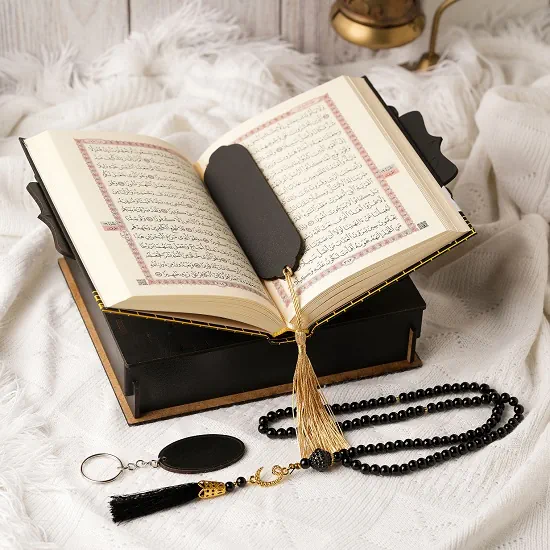
The Quran was revealed gradually over 23 years to ease understanding, memorization, and practice.
Read Why
The purpose of worship is to fulfill spiritual values such as devotion to God, inner peace, gratitude, and social solidarity as an expression of faith.
Read Why
Although Qudsi hadiths have a divine origin, they are not considered Quranic verses. It’s important to understand their fundamental differences in wording and worship context.
Read Why
In the Quran, God's use of the word “We” has linguistic and logical reasons, and it does not contradict the belief in monotheism.
Read WhyWe wanted to answer Islamic questions for visitors in a reliable, accurate, and understandable manner, thereby enabling people to reach correct sources regarding religious matters. As you know, recently, different people who define themselves as Muslims have emerged, going as far as to attack our Prophet.
By Islamic issues, we mean the topics that people are curious about and seek solutions for in religious matters. These questions encompass the correct performance of worship, social life, family relations, ethical values, and religious issues encountered in daily life. Furthermore, we want to include questions addressed to individuals who disseminate their own corrupted ideas.
We believe that Islam is the one true religion that regulates peoples lives. Islam highlights values such as justice, compassion, honesty, and patience in both people's individual and social lives, helping them find the right path and providing spiritual development. Faith is both light and strength. Yes, the person who achieves true faith can challenge the universe.
Currently, our Islam category includes sub-sections such as the Holy Quran, Hadith, Acts of Worship, Islamic Philosophy, and Religious Traditions. Each sub-section contains questions covering different topics that people are curious about. If you have any questions, you can send them immediately.
Islam is a belief system and a way of life while a Muslim is a person who follows this belief a Muslim lives according to Islamic teachings performs worship follows ethical and moral values fulfills social responsibilities and supports their spiritual development.
Yes, these questions are asked, and generally, people dont want them published. We answer questions clearly and definitively by consulting the Quran and Sunnah. If we cannot find a clear answer there, we direct them to the Diyanets (Religious Affairs Presidency) fatwa line, as giving a fatwa requires great Fiqhi (Jurisprudential) Competence.
When answering Islamic questions, we use the Quran and Hadith as our primary and main sources, and Ijma (Consensus), Qiyas (Analogical Reasoning), and reliable Islamic academic works as supplementary resources. If we detect hostility towards the Hadith or the Prophet among these sources, we immediately discard that source.
According to Islam, death is not an end but a transition; worldly life is a test, there is life after death, and people are responsible for the good and bad deeds they commit. Death is a discharge permit for the people of faith. It is a bridge leading to eternal life.
Religious traditions do not always mean Islamic rules some traditions emerge through cultural influences and may differ among sects Islamic rules are based on the Quran and Hadith while traditions are shaped through interpretation of these rules and their application in daily life.