
Why Do Rivers Flow in Curves?
Rivers flow in curves because water erodes the outer bank while depositing sediment on the inner bank, gradually forming the bends known as meanders.
Read Why
Rivers flow in curves because water erodes the outer bank while depositing sediment on the inner bank, gradually forming the bends known as meanders.
Read Why
Why Is DNA Double Helix Structure explains how the double helix provides stability accurate replication and reliable protection of genetic information.
Read Why
World War One started due to the assassination of Archduke of Austria and tensions of alliances.
Read Why
The Berlin Wall fell in 1989 due to economic problems and public demand for freedom.
Read Why
Clouds stay aloft because tiny droplets and rising air currents counter gravity, supported by the continuous balance of atmospheric conditions.
Read Why
The short answer to why the Moon constantly changes shape is that sunlight reaches it from different angles during its orbit around Earth.
Read Why
The question of why time flows in one direction is explained by physics and entropy because the universe moves toward increasing disorder.
Read Why
Why the speed of light cannot be exceeded is due to the relationship between matter and energy, making it a fixed and unattainable limit in the universe.
Read Why
Rome was divided: its size made governing complex, cultures failed to connect, and tyrannical administration ultimately caused the empires split.
Read Why
The foundation of the Ottoman Empire was shaped by frontier conditions strong leadership and the expanding gazi tradition.
Read Why
Seawater is salty because minerals from rocks and seafloor processes accumulate over millions of years without being removed.
Read Why
History repeats because human behavior and social patterns follow similar cycles leading to recurring outcomes across different eras.
Read Why
Knowing why history matters is essential for understanding the present and building a stronger future through a clear and informed historical awareness.
Read Why
Writing was invented to preserve information strengthen communication and support organized social structures.
Read Why
Why there are not few but many stars in the sky is explained by stellar density and cosmic light distribution
Read Why
The Sun appears red at sunset because atmospheric scattering removes blue light, allowing red wavelengths to dominate.
Read Why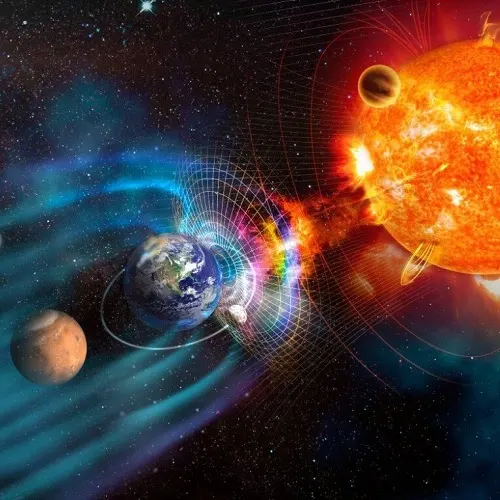
Planets rotate because of the conservation of angular momentum during the formation of the Solar System.
Read Why
Plants perform photosynthesis to convert sunlight into energy, allowing them to create food and sustain life.
Read Why
Soil undergoes erosion when wind and water carry away the upper fertile layer, weakening the land’s structure.
Read Why
Fossils are found in rocks because remains of living things are preserved and mineralized in sedimentary layers over time.
Read Why
The Earths crust moves because convection currents in the mantle push tectonic plates in search of energy balance.
Read Why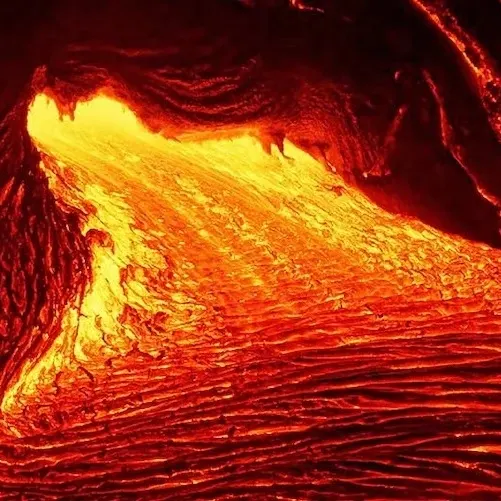
Magma rises to the Earth's surface due to pressure differences and density variations in the crust.
Read Why
Light refracts because its speed changes as it moves through materials of different densities.
Read Why
Sound cannot travel in a vacuum because there is no matter to transmit vibrations or carry the energy.
Read Why
Heat always flows from hot to cold because energy balance is governed by the second law of thermodynamics.
Read Why
Electrons do not fall into the nucleus because of quantum energy levels and the balance of electromagnetic forces.
Read Why
The mass of matter does not change because atoms are conserved and energy does not alter matter itself.
Read Why
Mosquitoes avoid some people because body odor, carbon dioxide, blood type and skin bacteria influence their attraction.
Read Why
Sleep deprivation weakens immunity because the body renews its defense cells during rest, and lack of sleep prevents this renewal.
Read Why
Gravity exists because mass bends spacetime, pulling objects toward each other.
Read WhyWhen we think of science it brings to mind research experiments and knowledge aimed at understanding nature and the universe, it is a field that satisfies human curiosity and advances technology and life.
The science category was created to provide people with reliable, clear and accurate information. It aims to answer curious questions, share research, facilitate access to knowledge, and help people develop scientific thinking. It also ensures that everyone interested can reach correct sources and increase social awareness.
Science issues represent topics that people are curious about, seek solutions for, and can be explained using scientific methods. These questions support research, learning and exploration, increase knowledge, generate new ideas, contribute to improving technology and living conditions, and strengthen social and individual development.
Questions related to science include information people are curious about regarding the workings of the universe, natural phenomena, health, technology, environment, and daily life. People ask these questions for academic or practical purposes. These questions are supported by experiments, observations, statistics, and research, satisfying the curiosity to access knowledge.
In science issues, there are subcategories such as physics, chemistry, biology, astronomy, environmental sciences, technology, health, and engineering. Each subcategory covers topics specific to its discipline, research methods vary, questions are approached from different perspectives, and satisfy human curiosity. Interdisciplinary connections provide more comprehensive knowledge.
Yes, when answering scientific questions, reliable academic sources, research, and expert opinions are used. This ensures information is accurate, trustworthy, and clear. Verifying sources supports learning, facilitates idea generation, and ensures people trust the information. It also increases social awareness.
Yes, our authors include people interested in science and knowledgeable in various disciplines. This allows questions to be approached from different perspectives, provides diverse viewpoints, prepares comprehensive and clear answers, supports scientific curiosity, helps people access accurate information, and strengthens learning processes.
Our suggestion in the field of science is to continue being curious, learn from reliable sources, not hesitate to experiment, increase knowledge, generate new ideas, and share research. This way people can achieve personal and social development, make learning continuous, and contribute to technological advancement.
Answering scientific questions can sometimes be difficult because reaching accurate information requires extensive research, reviewing sources, analyzing data, reasoning, and communicating complex concepts clearly. Questions may be multidisciplinary and it is important that every answer is reliable and consistent.